Testosterone Booster vs TRT: Cost Compared, and When Each One Makes Sense
Quick Answer: Testosterone Booster vs TRT on Cost?
Over-the-counter testosterone boosters usually cost $15 to $70 a month with no clinic fees. Medical TRT runs about $40 to $100 a month for injections, but gels can be $200 to $500 and pellets $1,000-plus, all requiring a prescription, doctor visits and bloodwork. Boosters are first-line lifestyle support; TRT is clinical treatment for diagnosed low testosterone.
- Cheapest sticker price: OTC boosters, at $15–70/mo, no clinic fees.
- Clinically effective for low T: TRT, but with prescription and monitoring costs.
- The threshold: testosterone under 300 ng/dL with symptoms warrants a doctor.
The testosterone booster vs TRT question usually arrives framed as a straight price fight, and on the sticker alone the answer looks obvious: an over-the-counter booster at $15 to $70 a month undercuts almost any medical route. But cost is only the entry point. The two options are not competing products so much as different tiers of intervention — one a supplement you can buy today, the other a prescribed medical therapy for a diagnosed condition. Comparing them properly means comparing not just dollars but oversight, effectiveness for your specific situation, and what you are actually trying to fix.
This guide lays the two side by side on the things that matter: real monthly cost including the hidden extras, the level of medical oversight each requires, and the use case each one fits. The goal is not to talk you toward the cheaper option or the medical one, but to help you place yourself accurately — because the wrong choice here is expensive in a way no price list captures.
What each option actually costs per month
Start with the honest numbers, because the headline price and the real price diverge sharply on the medical side.
Over-the-counter boosters are the simplest to price. A daily botanical-and-nutrient formula typically costs somewhere between $15 and $70 a month depending on the ingredients and pack size, and that is the whole cost. There is no consultation, no lab draw, no prescription fee. You buy it, you take it, and multi-bottle packs usually drop the per-month figure toward the bottom of that range.
TRT is more layered. The medication itself varies enormously by format. Standard testosterone injections — the workhorse of TRT — often run about $40 to $100 a month. Branded topical gels are far pricier, commonly $200 to $500 a month. Long-acting pellet implants, inserted under the skin every few months, can exceed $1,000 per procedure. On top of the medication sits the infrastructure TRT requires: an initial consultation, a diagnostic blood test, and repeat bloodwork to monitor levels and safety markers over time. Those recurring costs are easy to forget when you read only the pharmacy price.
The oversight gap is the real difference
Price differences follow from a deeper one: how much medical supervision each route carries, and why. A booster is a dietary supplement. You need no prescription, no diagnosis and no monitoring, which is exactly why it is cheap and accessible — and also why it cannot and does not claim to correct a genuine hormone deficiency. It sits in the same regulatory category as a multivitamin.
TRT is a prescribed medical treatment, and the oversight is not bureaucratic box-ticking. Introducing external testosterone changes how your body behaves: it can affect red blood cell counts, fertility, and other markers a doctor needs to watch. The bloodwork before and during treatment exists to confirm you genuinely need it and to keep it safe once you start. That supervision is a cost, but it is also the value — it is the difference between treating a diagnosed condition and guessing. This is why a doctor's involvement is not optional for TRT and is central to whether it is the right call at all.
Where a first-line support option fits
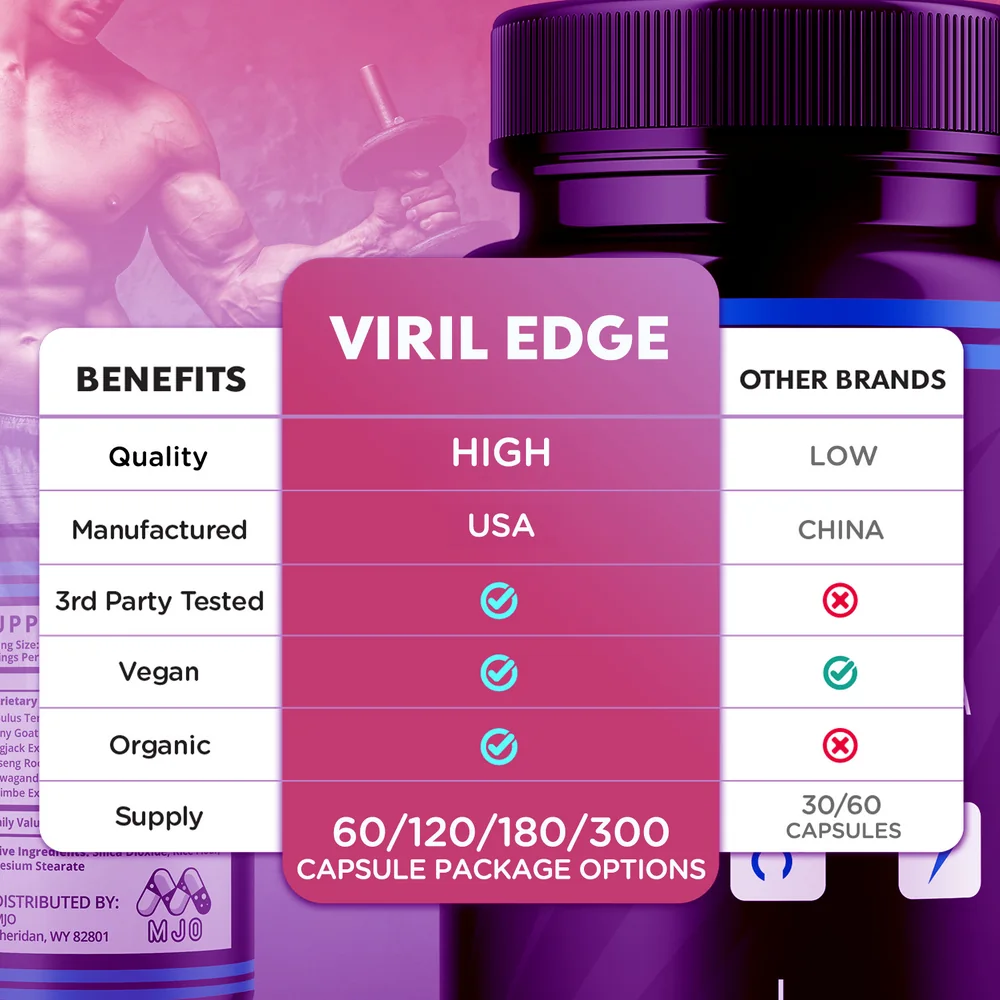
If you are in the milder, everyday range and want to back up good habits before considering anything medical, Viril Edge is a daily male-health support formula — tribulus, horny goat weed, longjack, panax ginseng, ashwagandha and yohimbe in one two-capsule serving. The official store publishes the panel, the pack options and the current price so you can compare it against the figures above.
See the Formula and Current PriceAd · you will be taken to the manufacturer's checkout
Testosterone booster vs TRT: the two options side by side
| Factor | OTC testosterone booster | Medical TRT |
|---|---|---|
| Typical monthly cost | $15–$70 | $40–$100 injections; gels $200–$500; pellets $1,000+ |
| Prescription needed | No | Yes |
| Bloodwork & monitoring | None required | Diagnostic test plus ongoing monitoring |
| What it does | Supports habits; fills nutrient gaps | Raises clinically low testosterone into normal range |
| Best for | Mild, everyday range; lifestyle support | Diagnosed low T (often <300 ng/dL) with symptoms |
| Insurance | Not covered | Often covered with a documented diagnosis |
Which use case is yours?
The decision gets much simpler once you separate two very different men. The first has ordinary, milder complaints — some fatigue, a bit less drive, the general flatness that creeps in with age and a demanding life — and testosterone that, if measured, would likely sit in the normal or low-normal band. For him, the sensible sequence is lifestyle first, supplement support second, and a doctor if things do not improve. TRT would be the wrong tool: expensive, medicalised, and aimed at a problem he may not have.
The second man has more pronounced, persistent symptoms and, crucially, a blood test showing genuinely low testosterone — often below 300 ng/dL — that a doctor has confirmed is not caused by something reversible. For him, a $30 supplement is not going to lift a clinically low level into the normal range, and relying on it can delay treatment he actually needs. TRT is the appropriate route, and its cost and monitoring are justified. The trap is a man in the second category shopping in the first category's aisle because it is cheaper.
How do you tell which one you are? You get tested. Symptoms alone are unreliable because low testosterone shares its signs with stress, poor sleep, thyroid issues and simple ageing. If any of this sounds familiar, our guide to the The Best Male Enhancement Pills on the Market: A 2026 Formula-Type Map explains which signs warrant a blood test rather than a supplement order.
Objection: "so a booster is just a waste of money?"
No — but it is easy to mis-sell, so it deserves an honest frame. A booster does not treat a deficiency, and if you have clinically low testosterone it will not fix it. What a well-formulated supplement can reasonably do is fill common nutrient gaps such as zinc and vitamin D that support normal hormone metabolism, and supply botanicals with small human trials behind them for fatigue and wellbeing. For a man in the mild range who has his training, sleep and body-fat basics in order, that support layer is a low-cost, low-risk add-on. For a man who skips the basics and expects the capsule to carry everything, it will disappoint. The value depends entirely on realistic expectations.
If you are weighing which product to buy, the ingredient list matters more than the marketing, and where you buy it matters too. We break down how to read a formula in our overview of the best testosterone booster for men in 2026, and we compare buying channels — official store, marketplace and retail shelf — in our guide to where to buy men's supplements and how the channels differ.
Objection: "can I try a booster to avoid TRT?"
Sometimes, and it is a reasonable instinct — but the sequencing has to be right. If your symptoms are mild and your levels are normal or borderline, improving lifestyle and closing nutrient gaps is a sensible first move, and many men feel better without ever needing medical therapy. What you should not do is use a supplement to postpone finding out what your actual level is. If your testosterone is genuinely low, "trying a booster first" simply delays effective treatment and can mean missing an underlying cause worth investigating. The right order is: get tested, then let the number tell you which tier you belong in. A booster can be part of the plan; it is a poor reason to avoid the test.
A note on insurance and the true bottom line
One factor can flip the cost comparison entirely: insurance. Because TRT treats a recognised medical condition, insurance often covers a meaningful share of it when a documented diagnosis justifies it, which can bring a $100 medication down to a modest co-pay. Boosters, as dietary supplements, are never covered — you pay full retail every time. So for a man with genuinely low testosterone and a diagnosis, insured TRT can end up costing less out of pocket than it first appears, while the booster's low sticker price is the whole price. The real bottom line is not "which is cheaper" but "which is correct for my situation" — and once that is settled, the cost usually takes care of itself.
Related reading
- Ashwagandha for Testosterone: Dose, Evidence and How It Actually Works
- How to choose the best testosterone booster for men in 2026
- Where to buy men's supplements: a channel-by-channel comparison
- Best Testosterone Supplements for Men Over 40
Frequently asked questions
Is a testosterone booster cheaper than TRT?
Usually, yes, on the sticker price. Over-the-counter testosterone boosters commonly cost around $15 to $70 a month with no clinic fees. Standard injectable TRT often runs about $40 to $100 a month for the medication itself, but branded gels can be $200 to $500 a month and pellet implants can exceed $1,000 per procedure, and all TRT carries added costs for the prescription, doctor visits and ongoing bloodwork.
When should I choose TRT over a natural booster?
TRT is the right path when a blood test confirms clinically low testosterone, typically below 300 ng/dL, alongside symptoms, and a doctor has ruled out reversible causes. It is a medical treatment for a diagnosed deficiency, not a lifestyle upgrade. A natural booster is a support option for men in the milder, more everyday range who want to back up good habits rather than treat a diagnosed condition.
Can a booster help me avoid TRT?
For some men in the mild or borderline range, addressing lifestyle and nutrient gaps, sometimes with a supplement layer, is enough to feel better without medical therapy. But a booster cannot raise genuinely low testosterone into the normal range the way TRT does. If your levels are clinically low, no supplement replaces medical treatment, and delaying evaluation to try capsules first can mean missing an underlying cause.
Does insurance cover testosterone treatment?
Insurance often covers TRT when a documented diagnosis of low testosterone justifies it medically, which can cut your out-of-pocket cost significantly, though co-pays, prior authorisation and lab fees still apply and cosmetic or anti-ageing use is generally not covered. Over-the-counter testosterone boosters are dietary supplements and are not covered by insurance, so you pay the full retail price yourself.
Medical note: this article is general information, not medical advice, and prices are typical US ranges that vary by provider and region. TRT is a medical treatment that requires a diagnosis and monitoring. Speak to a healthcare professional before starting TRT or any supplement, especially if you take medication.
Scientific references
- Urology Care Foundation — Low Testosterone (Hypogonadism) overview
- Mayo Clinic — Male hypogonadism: diagnosis and treatment
- FDA — Testosterone products safety communication
- NIH Office of Dietary Supplements — Zinc: Fact Sheet for Health Professionals
- PubMed — Hernández et al. (2024), cost-effectiveness of testosterone treatment using individual patient data from randomised trials
Compare the support option for yourself
If you have landed in the first-line support category, our full ingredient and label breakdown of Viril Edge shows exactly what is in the daily formula and where the evidence for each component stops. Current pack options and the price are listed at the official store.
Check Packs and PriceAd · sold direct by the manufacturer, not on retail shelves