Tribulus Terrestris in Viril Edge: Dose vs. What Trials Actually Show
Quick Answer: Does the Tribulus in Viril Edge Match What Was Studied?
There is no way to know. Viril Edge's Supplement Facts panel lists Tribulus Terrestris Extract first among six botanicals inside a single 838 mg “Proprietary Male Support Blend” per two-capsule serving. Only that combined 838 mg total is printed — the label does not say how many of those milligrams are tribulus versus the other five ingredients. Separately, PubMed-indexed research on tribulus itself is genuinely mixed: controlled trials measuring testosterone directly have mostly found no significant change, even at doses far above what a six-way 838 mg blend could plausibly contain, while some trials in men with erectile dysfunction report improved questionnaire scores without a matching testosterone rise. Those two facts — an undisclosed dose and inconsistent trial results — have to be read together, not separately.
- What's printed: Tribulus Terrestris Extract, first of six ingredients in an 838 mg blend; no individual amount given.
- What trials on testosterone show: mostly no significant effect, including at doses larger than this blend's total.
- What trials on erectile-function scores show: some improvement in men with existing ED, mechanism unclear.
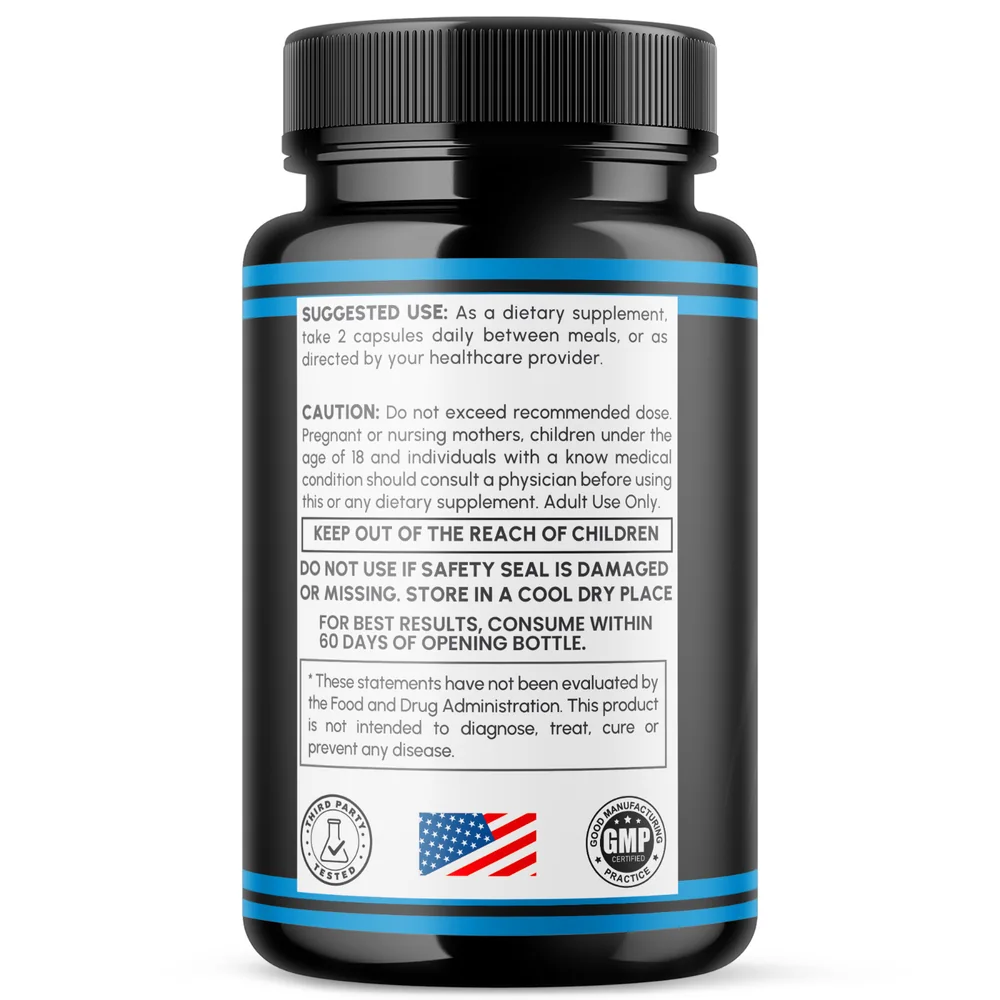
What the Viril Edge label actually says about tribulus
Viril Edge is sold as a 60-capsule bottle, two capsules per serving, 30 servings per bottle. The Supplement Facts panel lists a single line item — “Proprietary Male Support Blend, 838 mg, Daily Value not established” — followed by six botanicals in this printed order: Tribulus Terrestris Extract, Horny Goat Weed Extract (Epimedium Sagittatum), Longjack Extract (Eurycoma Longifolia), Ginseng Root Extract (Panax Ginseng), Ashwagandha Extract (Withania Somnifera), and Yohimbe Extract (Pausinystalia Yohimbe). Tribulus is named first, which in supplement labeling generally (though not always, and the label itself does not claim this) tracks with being the largest single contributor by weight — but that is an inference, not a printed fact. No extract ratio, no standardization percentage (for example, percent protodioscin or saponins), and no milligram figure for tribulus specifically appears anywhere on the bottle, the side panel, or in the marketing images we reviewed alongside it.
This is what is called a proprietary blend, and it is legal under U.S. supplement labeling rules: a manufacturer can disclose the combined weight of a blend without breaking out each ingredient's share, as long as ingredients are listed in descending order of predominance. The tradeoff for the consumer is transparency. With a blend label like this one, you can confirm that tribulus is present and confirm the upper bound on how much of it could possibly be in the serving (it cannot exceed 838 mg minus whatever the other five ingredients weigh, and realistically it is a fraction of that once six ingredients share the total). What you cannot do is confirm the actual number, and that number is exactly what matters for comparing this product to the research literature, because tribulus trials have used doses across a wide range and the results have not been consistent across that range.
What is Tribulus Terrestris, and why is it in a formula like this?
Tribulus terrestris is a flowering plant, sometimes called puncture vine, used in traditional Ayurvedic and Chinese medicine for a variety of purposes including urinary and reproductive complaints. Its modern reputation in Western sports-nutrition and male-vitality products rests mainly on steroidal saponins — protodioscin is the compound most often cited — which some early animal research suggested might stimulate luteinizing hormone and, downstream, testosterone production. That mechanistic story is why tribulus became a fixture of testosterone-support and libido products beginning in the 1990s and 2000s, and why it appears first in a blend explicitly named for male support.
The mechanistic story is plausible on paper. What matters for a buyer is whether it holds up when tested directly in controlled human trials, at doses that are actually reported, rather than assumed from animal data or extrapolated from a supplement label.
What the dose-response trials on tribulus actually used
One of the earliest and most frequently cited controlled trials on tribulus and androgen levels was published in 2005 by Neychev and Mitev in the Journal of Ethnopharmacology (PMID 15994038). Twenty-one healthy young men, aged 20–36, were randomized into two tribulus-dose groups and a placebo group. One group received 20 mg of tribulus extract per kilogram of bodyweight per day; the other received 10 mg/kg/day; both were split into three daily doses over four weeks. For a 75 kg (165 lb) man, the higher dose works out to roughly 1,500 mg per day — nearly double the entire 838 mg blend total in a Viril Edge serving, of which tribulus is only one of six components. The result: no statistically significant difference between either tribulus group and placebo in serum testosterone, androstenedione, or luteinizing hormone, measured repeatedly across 24 days of follow-up. The authors' own conclusion was that tribulus saponins showed “neither direct nor indirect androgen-increasing properties” at those doses.
A more recent trial took a different population and a fixed rather than weight-scaled dose. Fernández-Lázaro and colleagues, published in Nutrients in 2021 (PMID 34836225), gave 30 healthy CrossFit®-trained men either 770 mg of tribulus extract or placebo daily for six weeks, then measured body composition, hormones, and workout performance. Body composition and most performance measures did not differ between groups. The one hormonal signal the authors flagged was on testosterone specifically, which they interpreted cautiously as tribulus “may act as a testosterone booster helping recovery after physical loads and mitigating fatigue” — a narrower and more provisional claim than “raises testosterone,” and one tied to a fixed 770 mg daily dose of tribulus alone, not tribulus as one-sixth (or less) of an 838 mg mixed blend.
Both of these dose points — roughly 750–1,500 mg/day of tribulus by itself — sit at or above the entire Viril Edge blend total. That comparison alone should make the limits of an undisclosed-dose proprietary blend concrete: even in the most optimistic reading of the trial evidence, the doses that produced any measurable effect were delivered as the sole active ingredient, not shared six ways inside a smaller total.
Dose comparison at a glance
| Source | Tribulus dose tested | Population | Primary result |
|---|---|---|---|
| Neychev & Mitev, 2005 (PMID 15994038) | 10–20 mg/kg/day (≈750–1,500 mg for a 75 kg man) | 21 healthy young men, 4 weeks | No significant change in testosterone, androstenedione or LH |
| Fernández-Lázaro et al., 2021 (PMID 34836225) | 770 mg/day, fixed | 30 CrossFit®-trained men, 6 weeks | No change in body composition/most performance; testosterone flagged as a possible exception |
| Viril Edge (this product) | Not disclosed — one of six ingredients inside an 838 mg total blend | N/A — no clinical trial on the finished formula | Cannot be compared to either trial dose above |
What trials on erectile function and libido show — a different picture
Testosterone is not the only outcome tribulus has been studied for. A 2026 systematic review and meta-analysis by Suharyani and colleagues in the International Journal of Impotence Research (PMID 40360723) pooled eight randomized trials of tribulus in men diagnosed with erectile dysfunction. Using the standard IIEF-5 and IIEF-15 questionnaires, the meta-analysis found statistically significant improvement in erectile-function scores with tribulus versus placebo (IIEF-5 mean difference 3.23, IIEF-15 mean difference 14.44), with no significant difference in adverse events between groups. Notably, the same review reported that total testosterone levels did not differ significantly between the tribulus and placebo groups — meaning whatever improvement showed up on the questionnaire was not accompanied by a corresponding hormonal change, at least not one the pooled data could detect.
A separate 2025 systematic review of clinical trials by Vilar Neto and colleagues in Nutrients (PMID 40219032) reached a similar overall picture: some trials in ED populations report subjective and questionnaire-based improvement, but the evidence base is heterogeneous in dose, extract standardization, and trial duration, and the authors stop short of endorsing tribulus as a reliable testosterone-raising agent. Read together, the most defensible summary of the tribulus literature as of 2026 is this: the "raises testosterone in a healthy man" claim is not well supported, even at doses well above what a proprietary blend like Viril Edge's could deliver per ingredient, while a narrower "may improve self-reported erectile function in men who already have ED" signal has more support, through a mechanism that remains unclear and does not appear to be primarily hormonal.
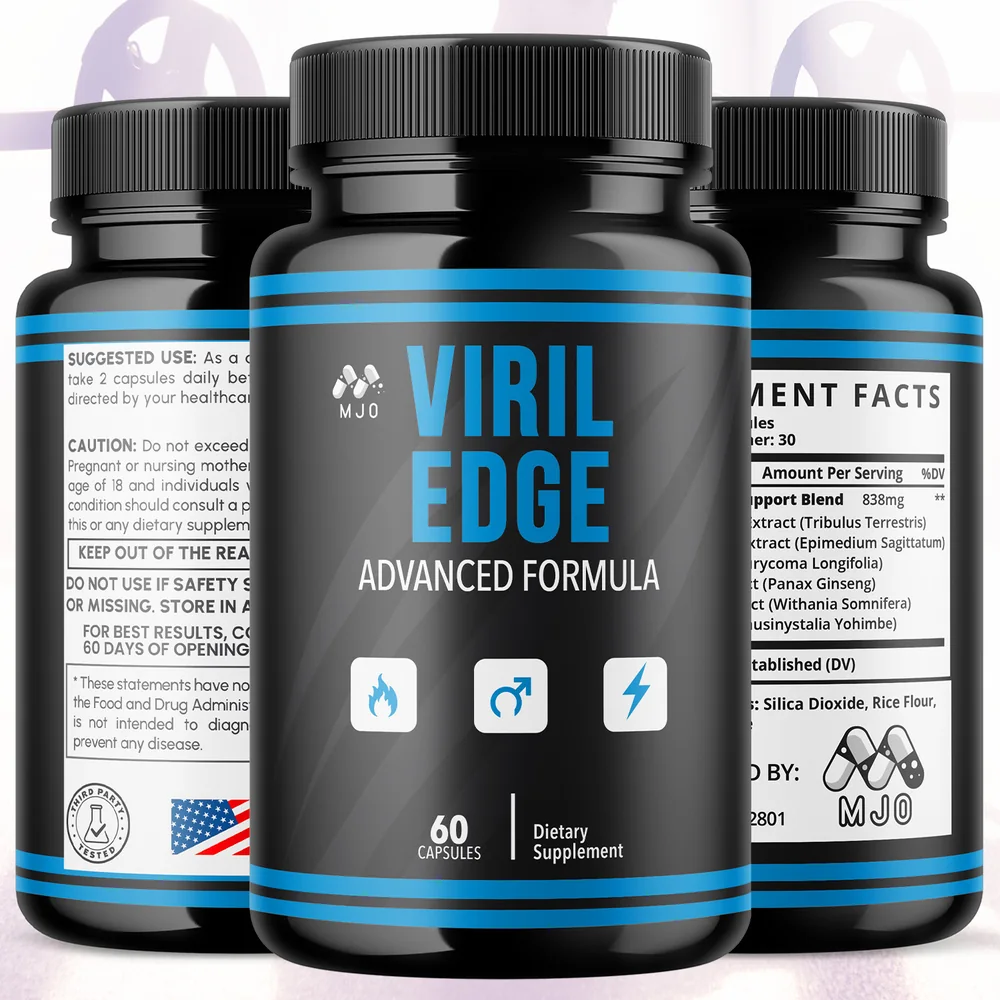
See the full label for yourself
Viril Edge lists tribulus terrestris first among six botanicals in its 838 mg blend. Review the full Supplement Facts panel and current pack sizes before you decide.
Order Viril EdgeAd · you'll leave this site to complete your order
What a proprietary blend does and doesn't let you check
A 2023 systematic review and meta-analysis in Nutrients by Petre and colleagues (PMID 37686709) analyzed dietary supplements marketed for erectile dysfunction and specifically flagged this dosing problem across the category: the review identified a handful of ingredients — including Panax ginseng, tribulus terrestris and L-arginine — with some trial support, but found that most marketed products combined many substances “frequently employed at a negligible dose or without any evidence,” and introduced the concept of a minimal effective daily dose (mED) as a benchmark products rarely disclose enough information to meet. That is precisely the structural issue with Viril Edge's label: tribulus has some trial support at specific, disclosed doses, but Viril Edge's panel does not let a buyer verify whether the product's share of 838 mg comes anywhere close to those doses, or is a token amount included mainly for the ingredient list.
This is not unique to Viril Edge, and it is not evidence of bad faith — proprietary blends are common across the men's-vitality category and are legal to sell this way. But it does mean that any claim connecting this product's tribulus content to a specific trial's outcome is not something the label supports. The honest position is: tribulus is present, its amount is unknown, and the published research on tribulus itself is mixed and dose-dependent in ways this label cannot be checked against.
How this compares with the other ingredients in the same blend
Tribulus is not unusual within this formula — every one of the six botanicals in Viril Edge's blend shares the same disclosure problem, because the 838 mg figure covers all of them together. We cover two of the others in detail elsewhere: our look at what published Epimedium (horny goat weed) research has actually measured finds an even earlier-stage evidence base, mostly in animal and cell studies rather than human trials, and our review of Panax ginseng evidence for male sexual function covers a 2021 Cochrane systematic review that found only a trivial effect on erectile function across nine pooled human trials. Our existing look at tongkat ali and zinc covers the longjack component of this same blend. Across all of these, the recurring theme is the same: individual ingredients can have real, PubMed-indexed research behind them, while the finished multi-ingredient product carries none of that research directly, because no trial has tested this specific formula at this specific set of doses.
Safety notes specific to tribulus
Across the trials reviewed here, tribulus was generally reported as well tolerated, with adverse-event rates similar to placebo in the pooled 2026 meta-analysis. That said, tribulus is not free of theoretical concerns: it has been studied far less in men with cardiovascular disease, in men taking blood-pressure or diabetes medication, or in combination with other botanicals that have their own stimulant-like or hormone-adjacent profiles — which is relevant here specifically because Viril Edge's blend also contains yohimbe, an ingredient with documented effects on heart rate and blood pressure and known drug interactions. The label itself carries a standard caution: not for use by pregnant or nursing women, those under 18, or anyone with a known medical condition without first consulting a physician, and adult use only. None of the trials cited above tested tribulus in combination with the other five botanicals in this specific blend, so the safety profile of the finished product as a whole has not been separately established.
Where the evidence stops
Two limitations are worth stating plainly, because they apply regardless of how the tribulus literature eventually resolves. First, no clinical trial has been conducted on the finished Viril Edge formula itself — every trial cited in this article tested tribulus (or another single ingredient) in isolation, at a disclosed dose, not this six-ingredient blend at its undisclosed proportions. Second, testosterone and erectile function are separate outcomes with separate evidence: a claim that tribulus “boosts testosterone” is not well supported by the controlled trials reviewed here, even though a narrower claim about self-reported erectile-function scores in men who already have ED has more support. Buyers reading marketing copy that conflates the two should treat that conflation skeptically. If you are trying to address a persistent sexual-health concern rather than general everyday vitality, that is worth raising with a clinician rather than a supplement label, proprietary blend or not.
Medical note: this article is general information, not medical advice. Viril Edge's blend also contains yohimbe, which can affect heart rate and blood pressure and interacts with several medications. Speak to a healthcare professional before starting any supplement, especially if you take medication or manage a health condition.
Scientific references
- PubMed — Neychev & Mitev (2005), “The aphrodisiac herb Tribulus terrestris does not influence the androgen production in young men,” Journal of Ethnopharmacology
- PubMed — Fernández-Lázaro et al. (2021), 6-week randomized trial of 770 mg/day Tribulus terrestris in CrossFit®-trained men, Nutrients
- PubMed — Suharyani et al. (2026), systematic review and meta-analysis of Tribulus terrestris for erectile dysfunction, International Journal of Impotence Research
- PubMed — Vilar Neto et al. (2025), systematic review of Tribulus terrestris supplementation, erectile dysfunction and testosterone levels, Nutrients
- PubMed — Petre et al. (2023), systematic review, meta-analysis and rational use of dietary supplements for erectile dysfunction, Nutrients
Related reading
- Horny goat weed (Epimedium) in Viril Edge: what the research measured — the second botanical in the same 838 mg blend.
- Panax ginseng for male vitality: the evidence behind the ingredient in Viril Edge — a Cochrane review's verdict on ginseng and erectile function.
- Tongkat ali, zinc and testosterone: what the evidence says — covers longjack, another component of the same blend.
- Two-minute label checks worth running before you buy — how to spot a proprietary blend and what it hides.
Frequently asked questions
How much Tribulus Terrestris is in Viril Edge?
The label does not say. Viril Edge lists Tribulus Terrestris Extract first among six botanicals inside a single 838 mg “Proprietary Male Support Blend” per two-capsule serving. Only that combined 838 mg total is printed; the individual amount of tribulus, or of any of the other five ingredients, is not disclosed anywhere on the label.
Does Tribulus Terrestris raise testosterone?
Mostly no. A 2005 controlled trial in young men found no significant change in testosterone, androstenedione or luteinizing hormone at 10 or 20 mg/kg bodyweight per day. Later systematic reviews and meta-analyses have generally reached the same conclusion for total testosterone, even when trials reported improvements in erectile-function questionnaire scores.
Does Tribulus Terrestris help erectile function or libido?
Some trials in men with existing erectile dysfunction report improved IIEF (International Index of Erectile Function) scores compared with placebo. A 2026 meta-analysis of eight such trials found a statistically significant improvement, without a corresponding rise in total testosterone — suggesting any benefit, if real, is not primarily hormonal.
What dose of Tribulus Terrestris was used in these trials?
Studied amounts vary widely: from roughly 10–20 mg per kilogram of bodyweight per day (about 750–1,500 mg for a 75 kg man) in early hormone studies, to a fixed 770 mg per day in a six-week trial in trained men. Because Viril Edge does not print a tribulus-specific dose, there is no way to know whether its share of the 838 mg blend falls anywhere near the amounts these trials tested.
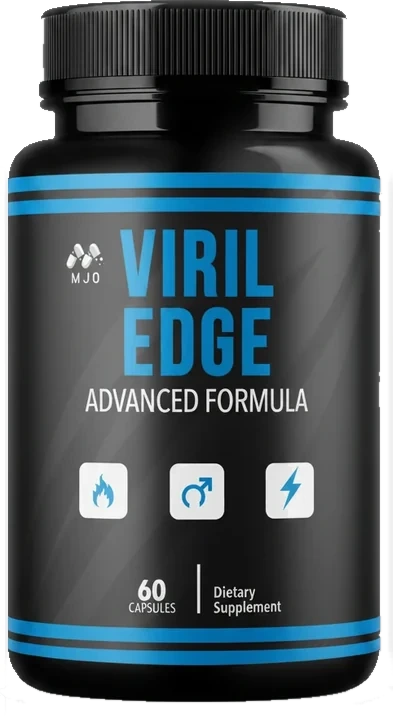
Check the full ingredient panel
Tribulus terrestris, horny goat weed, longjack, panax ginseng, ashwagandha and yohimbe in one 838 mg blend — see the complete label before you order.
Order Viril Edge